

Friday, 22 November 2013
Four directions in two different places.
If you're in Scarborough or Stoke this weekend, you'll be able to see my work 'Watermark, an intervention in four directions'. It continues to be shown as part of Small Change at Airspace Gallery in Stoke on Trent and will also feature in a set of screenings by Axisweb as part of this weekend's Art Party Conference at the Spa in Scarborough. For more information on the Art Party Conference, click here.

Saturday, 9 November 2013
Small Change, Airspace Gallery. Until 7 December 2013
AN EXHIBITION ABOUT CHANGE IN REAL AND IMAGINED CITIES
AirSpace Gallery - 8th Nov - 7th Dec, 2013
CURATED by Sevie Tsampalla
ARTISTS - Jane Lawson, Noor Nuyten, Lauren O'Grady,
Claire Weetman
COLLECTIVES - Buddleia / public works, Network Nomadic Architecture, Plus-tôt Te laat, Quartier Midi, Spectacle
"small change focuses on change and placemaking in the city, seen both as a physical and imagined entity. The project comprises a group exhibition featuring existing and new work by four artists, a public intervention and a talk. Alongside artists, collectives from the UK and beyond contribute to the exhibition with audiovisual material that documents their engagement with the public realm.

The exhibition is a response to the book Small Change by architect Nabeel Hamdi and its main idea that small-scale actions have the power to bring about positive change in urban communities. Acknowledging creative practice and collectivism as agents of change, the exhibition invites artists and collectives whose practice addresses issues of place and social change. The artists will realise new work, alongside showing existing sculptures, drawings and video’s. Audiovisual material from collectively-run projects that aim to making meaningful contributions to their environments, will open up the gallery space to various localities and concerns. "
I am exhibiting a number of works in this show, Watermark, an intervention in four directions is being shown on four monitors installed at floor level. Using the paving stones of a pedestrianised square in Istanbul as a canvas, Watermark follows prominent lines of passage across the space, linking ferry, bus and taxi terminals at the edge of the Bosphorus with the Beşiktaş area of the city.

Chatham Road (Eventually everyone had moved) traces where displaced residents of a single street had relocated and has also been selected for this show along with a first public outing for my Would you tell me, please, which way I ought to go from here collages, which can be found gently glowing in the darkened space to the rear of the gallery.

I'm creating a new intervention as part of this exhibition titled 'reversal of flow' which will take place in the city centre of Stoke on Trent during the exhibition and is inspired by recent re-organisation of bus routes and one way streets in the town centre. Watch this space for documentation of the work once it has taken place.
There's a host of other great works in this show, including Jane Lawson's proposals for alternative economic systems, Lauren O'Grady's 'Other Possible Locations' sculptures and the beautifully poised works of Noor Nuyten.


AirSpace Gallery - 8th Nov - 7th Dec, 2013
CURATED by Sevie Tsampalla
ARTISTS - Jane Lawson, Noor Nuyten, Lauren O'Grady,
Claire Weetman
COLLECTIVES - Buddleia / public works, Network Nomadic Architecture, Plus-tôt Te laat, Quartier Midi, Spectacle
"small change focuses on change and placemaking in the city, seen both as a physical and imagined entity. The project comprises a group exhibition featuring existing and new work by four artists, a public intervention and a talk. Alongside artists, collectives from the UK and beyond contribute to the exhibition with audiovisual material that documents their engagement with the public realm.

The exhibition is a response to the book Small Change by architect Nabeel Hamdi and its main idea that small-scale actions have the power to bring about positive change in urban communities. Acknowledging creative practice and collectivism as agents of change, the exhibition invites artists and collectives whose practice addresses issues of place and social change. The artists will realise new work, alongside showing existing sculptures, drawings and video’s. Audiovisual material from collectively-run projects that aim to making meaningful contributions to their environments, will open up the gallery space to various localities and concerns. "
I am exhibiting a number of works in this show, Watermark, an intervention in four directions is being shown on four monitors installed at floor level. Using the paving stones of a pedestrianised square in Istanbul as a canvas, Watermark follows prominent lines of passage across the space, linking ferry, bus and taxi terminals at the edge of the Bosphorus with the Beşiktaş area of the city.


I'm creating a new intervention as part of this exhibition titled 'reversal of flow' which will take place in the city centre of Stoke on Trent during the exhibition and is inspired by recent re-organisation of bus routes and one way streets in the town centre. Watch this space for documentation of the work once it has taken place.
There's a host of other great works in this show, including Jane Lawson's proposals for alternative economic systems, Lauren O'Grady's 'Other Possible Locations' sculptures and the beautifully poised works of Noor Nuyten.
Monday, 28 October 2013
Thoughts and Pictures, The Vice Chancellor's Lodge, Liverpool
An exhibition in association with Arena Studios and Gallery, Thoughts and Pictures brings you a taste of the impressive work which is emerging from Liverpool’s grass roots arts scene.
Featuring: Josie Jenkins, Richard Robinson, Phil McKay, Susan Stevens, Carol Ramsay, Mike Snowdon, Lucy Wilson, Nathan Pendlebury, Helen Pendlebury, Anthony Pendlebury, Mo Peacock, Claire Weetman, Julie Dodd, Anna Ketskemety, Richard Robinson and Gareth Kemp.

This Autumn, Sir Howard and Lady Newby are delighted to host Thoughts and Pictures, an exhibition which brings together a mixture of selected artists showcasing artistic talent from across Liverpool. The featured artists are linked through the craftsmanship they use to represent their vision, presenting art, craft and illustration which displays real skill and process in its execution, whether the work is figurative or abstract.
A small percentage from the sales of work in this exhibition will be donated to Arena Studios and Gallery to support its continuing programme of events and exhibitions. For more information about Arena Studios and Gallery please visit www.arenastudiosgallery.com .
The Exhibition will be held at The University of Liverpool Vice-Chancellor’s Lodge, strictly by invitation only and not available for viewing at any other time. If you would like an invitation to one of the open events, please email info@claireweetman.co.uk
Featuring: Josie Jenkins, Richard Robinson, Phil McKay, Susan Stevens, Carol Ramsay, Mike Snowdon, Lucy Wilson, Nathan Pendlebury, Helen Pendlebury, Anthony Pendlebury, Mo Peacock, Claire Weetman, Julie Dodd, Anna Ketskemety, Richard Robinson and Gareth Kemp.

This Autumn, Sir Howard and Lady Newby are delighted to host Thoughts and Pictures, an exhibition which brings together a mixture of selected artists showcasing artistic talent from across Liverpool. The featured artists are linked through the craftsmanship they use to represent their vision, presenting art, craft and illustration which displays real skill and process in its execution, whether the work is figurative or abstract.
A small percentage from the sales of work in this exhibition will be donated to Arena Studios and Gallery to support its continuing programme of events and exhibitions. For more information about Arena Studios and Gallery please visit www.arenastudiosgallery.com .
 |
| Works by Mike Snowden, Julie Dodd, Susan Stevens |
 |
| Works by Mo Peacock and Josie Jenkins |
 |
| Works by Nathan Pendlebury |
The Exhibition will be held at The University of Liverpool Vice-Chancellor’s Lodge, strictly by invitation only and not available for viewing at any other time. If you would like an invitation to one of the open events, please email info@claireweetman.co.uk
Thursday, 24 October 2013
Keep the Pavement Dry
Friday 18 October saw the opening of the Warrington
Contemporary Arts Festival, with the venues of The Gallery at Bank Quay House,
The Pyramid and Warrington Museum & Art Gallery being linked by a trail of
drawings cleaned into the pavement surface.


The artworks are the culmination of a commission I've been
working on called 'Keep the Pavement Dry' and began life during a number of
photography walks around Warrington
in Early September. Groups of
enthusiastic photographers joined me on research walks around the town with the
brief to 'be curious'. Walking around
the town with fresh eyes, looking up, crouching down, peering through or
climbing over, photographs were taken of often overlooked parts of
architecture. The photographs, shared
via an online blog, provide a snapshot of Warrington
and are an interesting exercise in how different people are drawn to a range of
details in their environment.
During the walks I became interested in two key elements of
the townscape. The first element is what
inspired the title of the work, 'Keep the Pavement Dry'. Queens
Gardens, in the centre of the
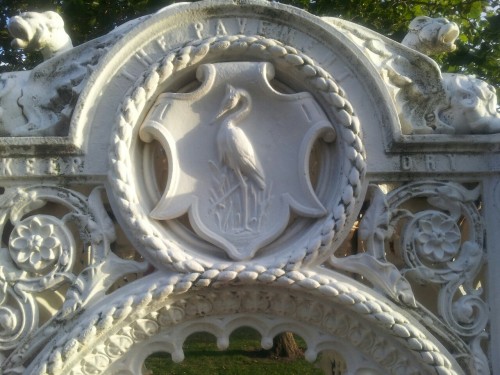
Cultural Quarter, houses a white painted, cast iron piece of street
furniture. The tall, narrow, ornate
canopy stands in the centre of the gardens raised on steps. On one side is a profile of Queen Victoria,
whilst on the other three sides is the inscription 'KEEP THE PAVEMENT
DRY'. Curiosity was aroused and I looked
into why this instruction, endorsed by a stern looking Victoria,
should be on this item of street furniture.
A short internet search discovered that this is a common inscription on
public drinking fountains, it seeming that mischievous Victorians would be only
too happy to splash water around the place without this reminder. The bowl of the Queens
Gardens drinking fountain was
removed at some point (someone told me how, as an enthusiastic child, he
tripped while going up the steps surrounding the fountain and split his
forehead on the edge of the bowl).
Knowing that my process of creating a trail of drawings around Warrington
was going to involve spraying water onto the pavement, this seemed too great a
coincidence to ignore.
The second element of the townscape that piqued my curiosity
was also Victorian in origin - cast iron railings. Warrington
is renowned for it's ornate 'Golden Gates' in front of the Town Hall, but it
was the overlooked railings that were of greater interest to me. Railings moderate our movement around a city,
separating private and public spaces, marking out the boundaries of property or
preventing us from falling into basements.
During the second world war many iron railings were removed with the
intention of helping the war effort, resulting in fewer barriers to movement, a
democratisation of public space. The
railings adjacent to the Golden Gates were victims of this cull, the cropped
curls still visible on the low wall that edges around Bank
Park. This absence draws attention to the railings
that still exist, their decorative points extending upwards, preventing us from
falling down into basements or from balconies.
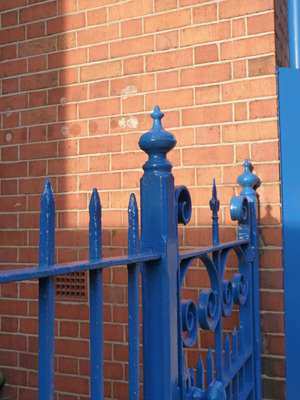
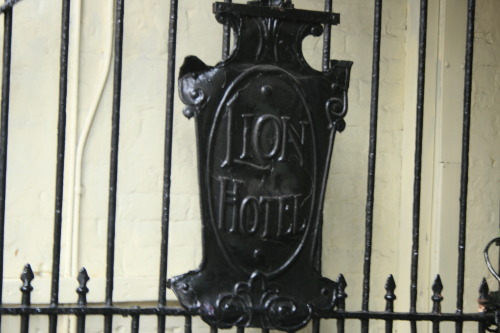
I worked the decorative designs from these elements of Victorian
street furniture into drawings, first on paper and then using the
computer. Linear elements were combined
with flowing organic designs to create a set of stencils that could point
people in a certain direction around the town, moderating and influencing their
movement in a similar way to railings and providing maybe a more gentle guide
than the stern instruction to not splash water all over the place.
The drawings were cut into thick plastic using a laser
cutter, creating stencils that could be placed on the pavements around Warrington. Further walks around town located pavements
which were suitable for the process of jet washing the drawings in place. The requirement for a flat, smooth, suitably
dirty paving stone meant that large areas of the town had to be disregarded due
to tarmac footpaths being present.
Locations were chosen considering how people move through the town with
junctions and corners being the key locations for the drawings. The work considers what routes are taken from
the town centre into the cultural quarter.
Can this intervention effect movement towards the festival venues?
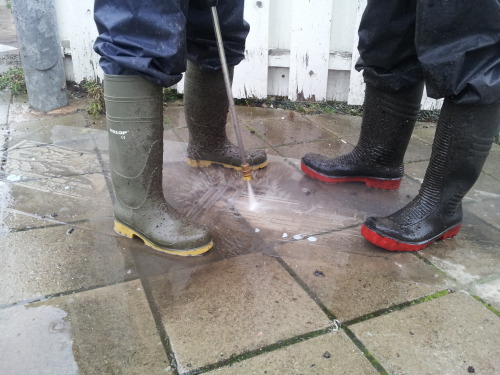
My practice involves drawing, often with graphite and an
eraser, so the process of using a jet washer to erase dirt from the pavement is
not such a big leap away from a more traditional artistic approach. Assisted by Warrington's
Town Centre Wardens who provided equipment, manpower, a knowledge of where to
get a water supply and a can-do approach, installation of the work began. The stencils were placed onto the pavement,
considering which direction people should be led in, then water was jetted
through the stencil, removing the dirt from the pavement in that particular
area. When removed, the stencil reveals
the clean, erased, pavement contrasting with the dirtier, original
surface. The A1 stencils were placed
around 150 times around the town, creating a drawing approximately 120m long if
all laid end to end, making this a physically demanding drawing process due to
it's sheer scale.
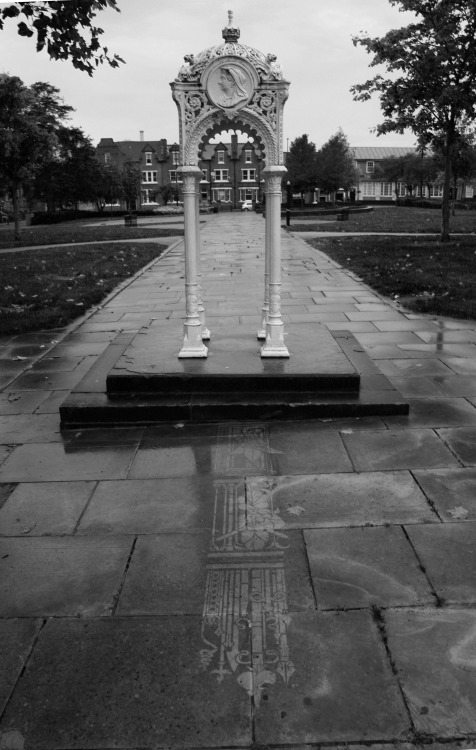
The drawings have begun to interrupt people's movement
within Warrington, with people
having been sighted hopping over them, walking around them and showing their
curiosity with a double take as they walk past them. The designs will gradually fade as footfall,
air pollution, weather and street cleaning activity redistributes the dirt,
resulting in the pavement naturally returning to an unembellished surface once
the festival ends.
The best way to see the work, is to just wander around Warrington,
especially Queens Gardens and the Cultural Quarter with a curious eye, whilst
hopping between the broad range of exhibitions and events at venues and in the
Town Centre. Below you'll find a map
which shows how the drawings are located around Warrington,
with each pinpoint clickable to reveal a photograph of the artwork.
View Keep the Pavement Dry in a larger map
With thanks to:
Culture Warrington, The Gallery at Bank Quay House, Warrington's Town Centre Wardens, Creative Remedies Photography Group, Eco Street Adverts, all the photographers who contributed.
Subscribe to:
Posts (Atom)